Why are we doing this?
By Aryan Sarin, Founder & CEO of Pnchy
I want to start by saying what we're not.
We're not another group of college kids who heard about AI and saw a get-rich-quick scheme. We're not building something because it sounds good on a pitch deck. All four of us, me, Ethan, Felix, and Jeivian, are building Pnchy because we've watched the places that raised us quietly disappear, and we're tired of pretending that's just how it goes.
Every one of us has a family member or has personally worked with a small business. Not in some "I did a case study in my MBA class" way, in a "I was in the back stocking inventory on a Saturday" way. My aunt runs an Indian clothing boutique in New Jersey. I helped her open it. Not just the idea, the actual logistics. Moving inventory, stocking shelves, sitting at her kitchen table, trying to figure out how to get people to walk in. She'd been pondering that store for years, and we pushed together to make it real. I've seen what it takes. It's not glamorous. It's hard, thankless work, and the hardest part isn't the product, it's getting anyone to know you exist.
That's the thing nobody talks about. Small businesses are getting crushed, and it's not because their food is bad or their haircuts are mediocre. It's because the deck is stacked against them. Rents are brutal. Inventory costs keep climbing. And on top of running the store, managing employees, and somehow making every customer feel like they matter, they're also supposed to be their own marketing department? With what time? With what budget?
I've lived in suburban, rural, and city life. When I was at Penn State and then getting my master's at Berkeley, I kept going back to the same local spots. Shout out to Big Dean's and Teadori. Shout out to the sandwich shop in Berkeley next to Mind Coffee, where that lady served me hot sandwiches almost every day. Apart from my circle of friends, she was often the one different person who made my day pleasant. She didn't know my GPA or what clubs I was in. She just knew my order and asked how my day was going.
I currently live in Boston. New city, basically no friends in the area, everyone I know is from college or through my lovely girlfriend, who I met here. I've seen those Instagram reels showing what's cool for the week in Boston, and yeah, that brings visibility, and yeah, I get excited, but then I forget about it, or there's no real incentive to go unless my girlfriend bugs me. And I know I'm not the only one. There are so many people in a new city or even in their own city who just need a little push to step outside and explore what's actually around them. Not getting a coffee at Starbucks or buying a sandwich through Shake Shack, but visiting local spots, the kind of places you can actually show off when your loved ones come visit from out of town. Like Cafe Vittoria. Places with a story.
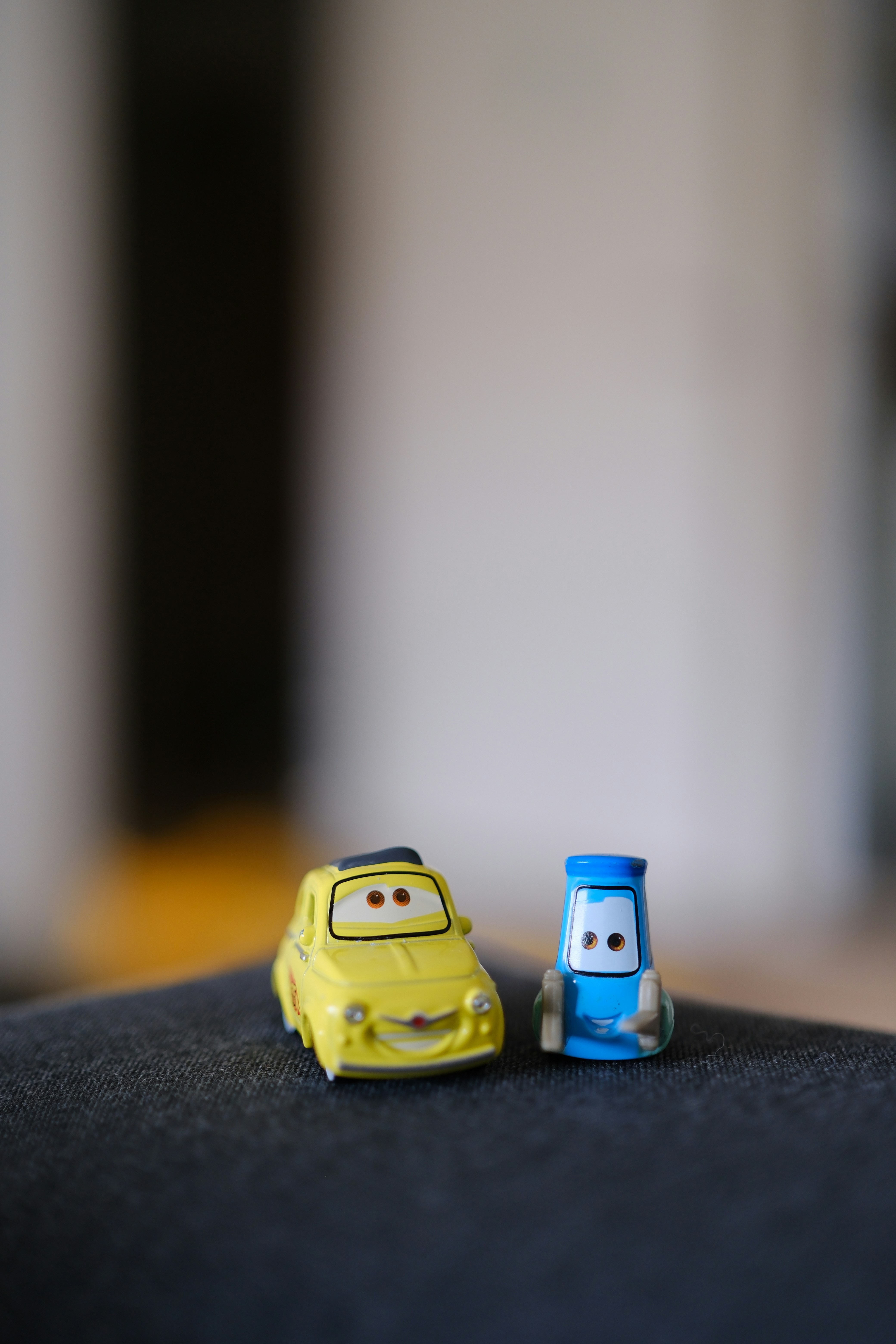
Look, at the end of this yap session, all I want consumers to take away is that this is way more than an app. It's an initiative to bring back the charm of the places we love or grew up in. Because trust me, these big chains rolling in are fine, but they make every town look like every other town. Have you ever watched Cars? Think about Radiator Springs. A small town full of character that got bypassed by the highway and slowly forgotten. I'm trying to be Lightning McQueen for this initiative, not because I'm fast, but because I showed up, realized what mattered, and decided to help bring it back. These small businesses are the ones who give a place its soul. They're the ones who bring the charm. Not us. Not the chains. Them.
The tools that are supposed to help these businesses? They're not solving this. POS systems like Square and Toast handle payments and inventory, fine, but that's a checkout tool, not a "get people through my door" tool. Square has a loyalty add-on: $45/month, points-based, with custom rewards per store. I'll give them that. But point systems confuse consumers fast. How many stars is a free coffee? Is it 50? 500? Nobody knows without doing math, and nobody wants to do math to get a free latte. Toast has a takeout app and lets businesses build their own branded app, but consumers don't want to download a separate app for every sandwich shop they visit. And takeout keeps people on the couch. I DoorDashed for a whole year in undergrad before I walked into a place I'd ordered from dozens of times. Seeing it in person, the space, the people, the smell, completely changed my experience with the food. Convenience and connection aren't the same thing. Both Square and Toast lean on SMS marketing to reach consumers. Be honest: how many of those promotional texts do you actually open? They get buried under group chats and two-factor codes. That's not visibility, that's noise.
And the timing is getting worse, not better. Third-party cookies are dying. The small businesses that figured out digital ads are losing their ability to retarget. 61% of restaurant operators reported declining foot traffic in 2024. There are roughly 3 million independent brick-and-mortar businesses in this country, cafes, salons, barbershops, fitness studios, boutiques, comic book stores, and the vast majority have no data on who walks in, who comes back, or why someone stopped showing up. The loyalty management market is a $4.6 billion industry, and over 60% of that spend is enterprise chains with tech teams and six-figure software budgets. Nobody is building for the corner shop.
That's why we're building Pnchy.
The name comes from a punch card. The physical ones I used to get at the Gentlemen's Salon. I lost those cards all the time, but I still kept going back. Not for the free haircut at the end, for the personalized service and the local lore they'd drop on me. Stories about the neighborhood, who's opening what, what's going on around the block. It pulled me out of my undergraduate bubble and made me feel like I belonged somewhere.
We took that feeling and asked: what if we could scale it? What if a barber, a cafe, or a comic book store could have a real loyalty system, not points, just visits, where a customer always knows exactly where they stand? "Three more visits and I get a free cortado." Simple. What if instead of SMS blasts, there was one map where you could see every local spot near you, how close you are to your next reward, and what's happening on your block right now? What if enough people show up to an area and everyone unlocks a reward together, not because an algorithm decided it, but because the community made it happen?
That's Pnchy. That's what we're building. Not because it's a clever business model, but because we've sat across the table from our aunts and uncles and friends who pour everything into a small business and have no way to tell the neighborhood they exist.
This is for the local cafes, boutiques, boba shops, comic book stores, bowling alleys, and mom-and-pop shops. This is for every block that's losing what makes it special and doesn't know how to fight back.
One block at a time.